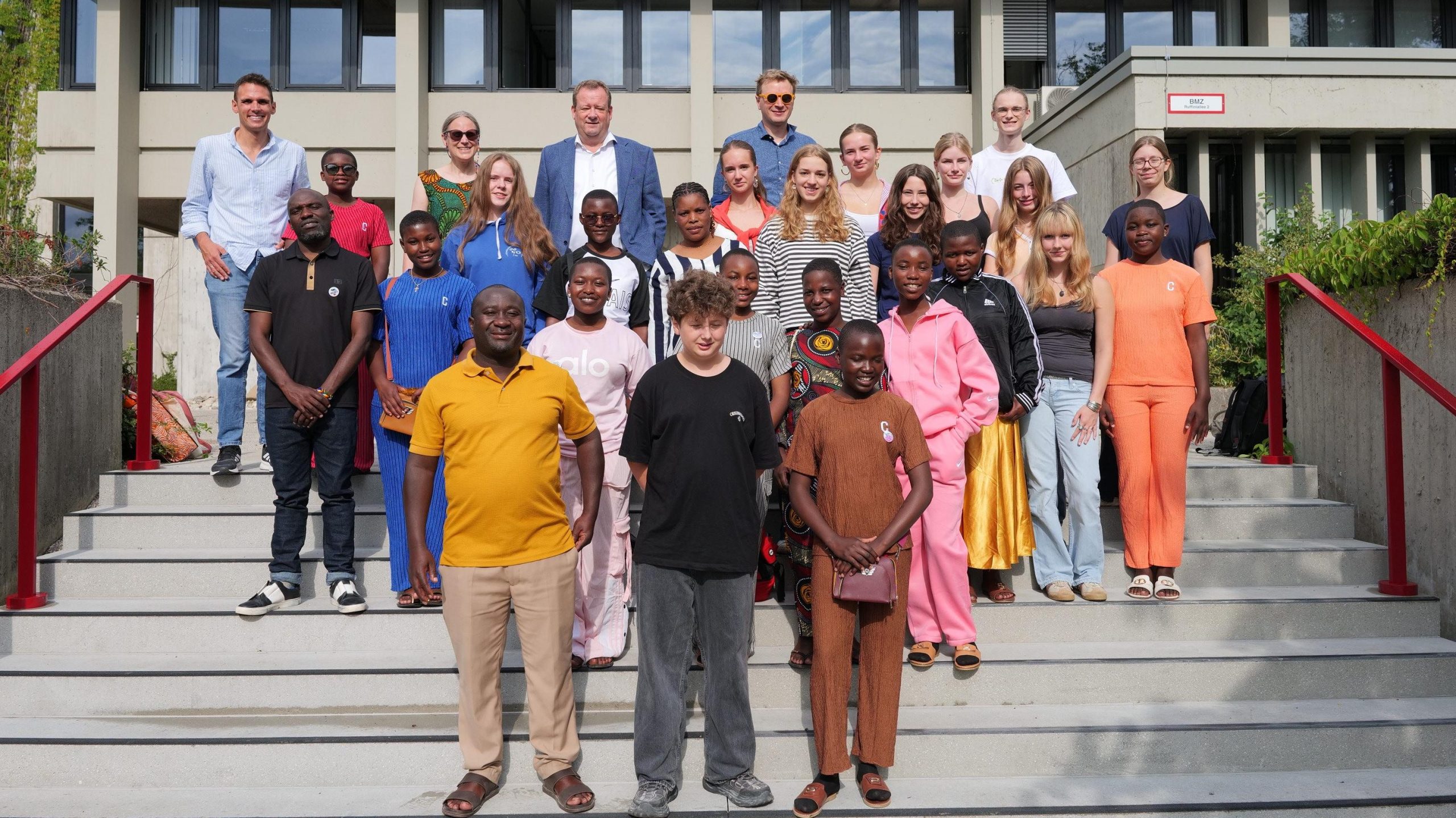
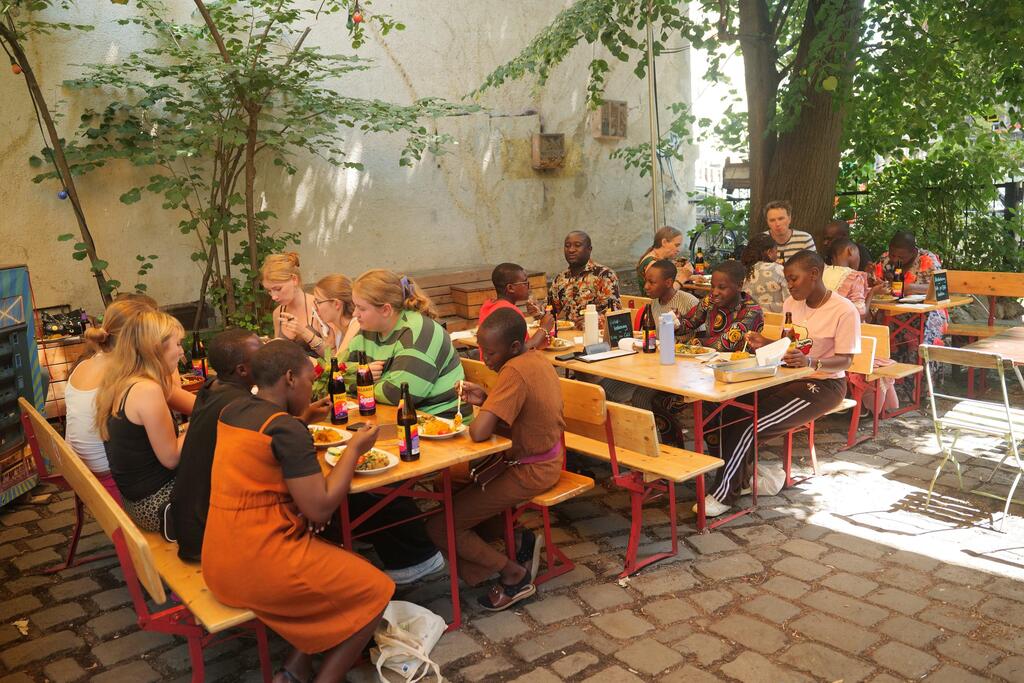
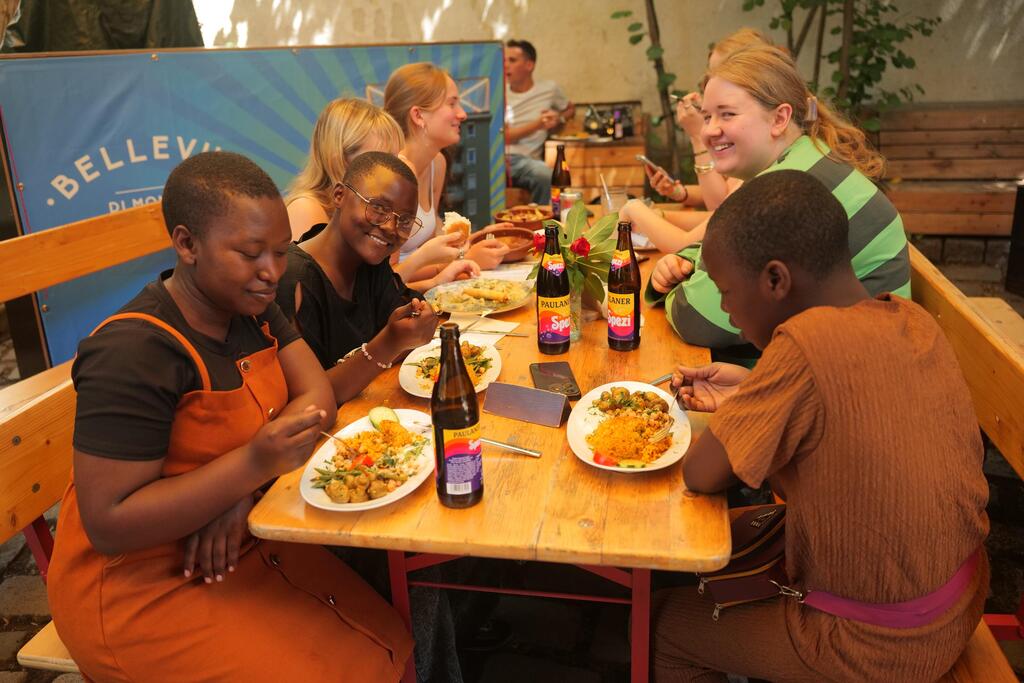
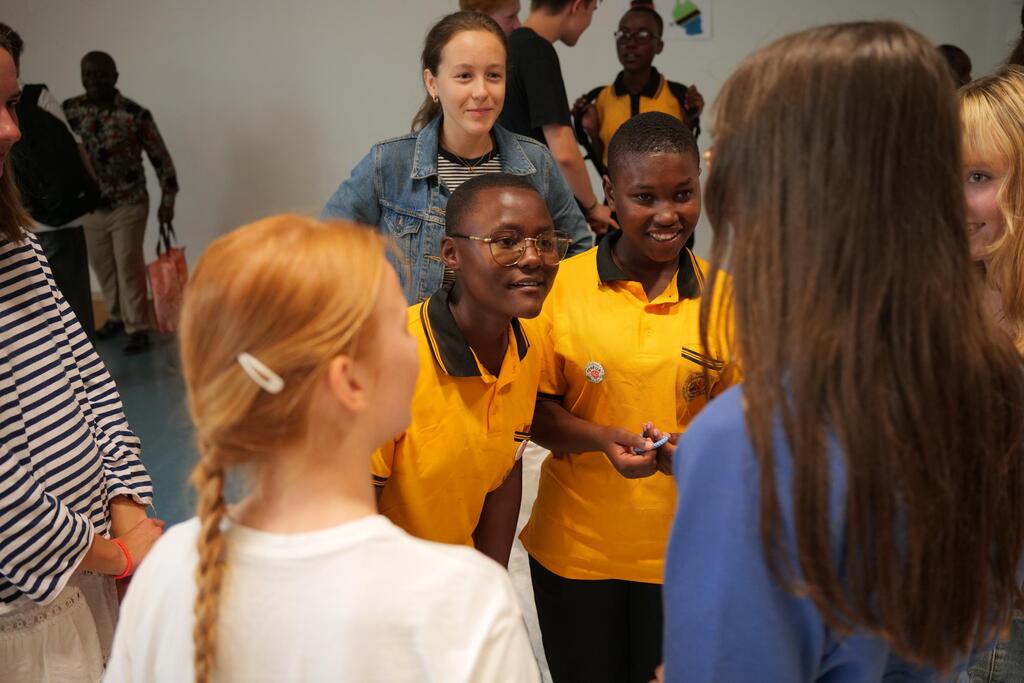
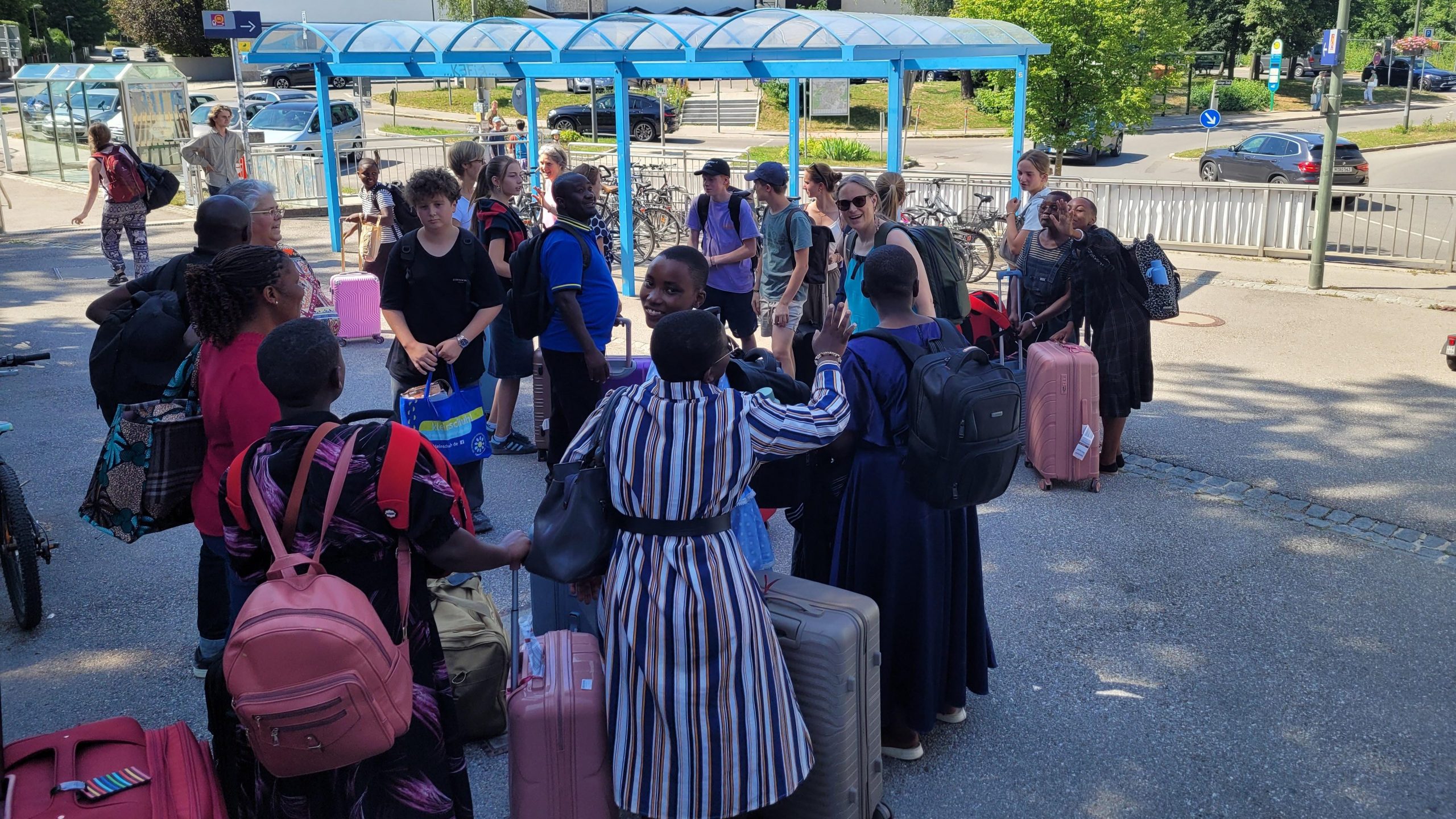
After leaving from the hostel on Monday, we took the train to Lochham where we were welcomed well by our guest families helping us with our luggage and driving us to their homes. They showed us their environment like gardens and rooms.
Fortunately the guest family members are all very kind and loving and always make us enjoy our time here, so we say Thanks to all the families for their kindness. Thank you for everything and God bless you!
Gerlinde, Rosemary and Agnes
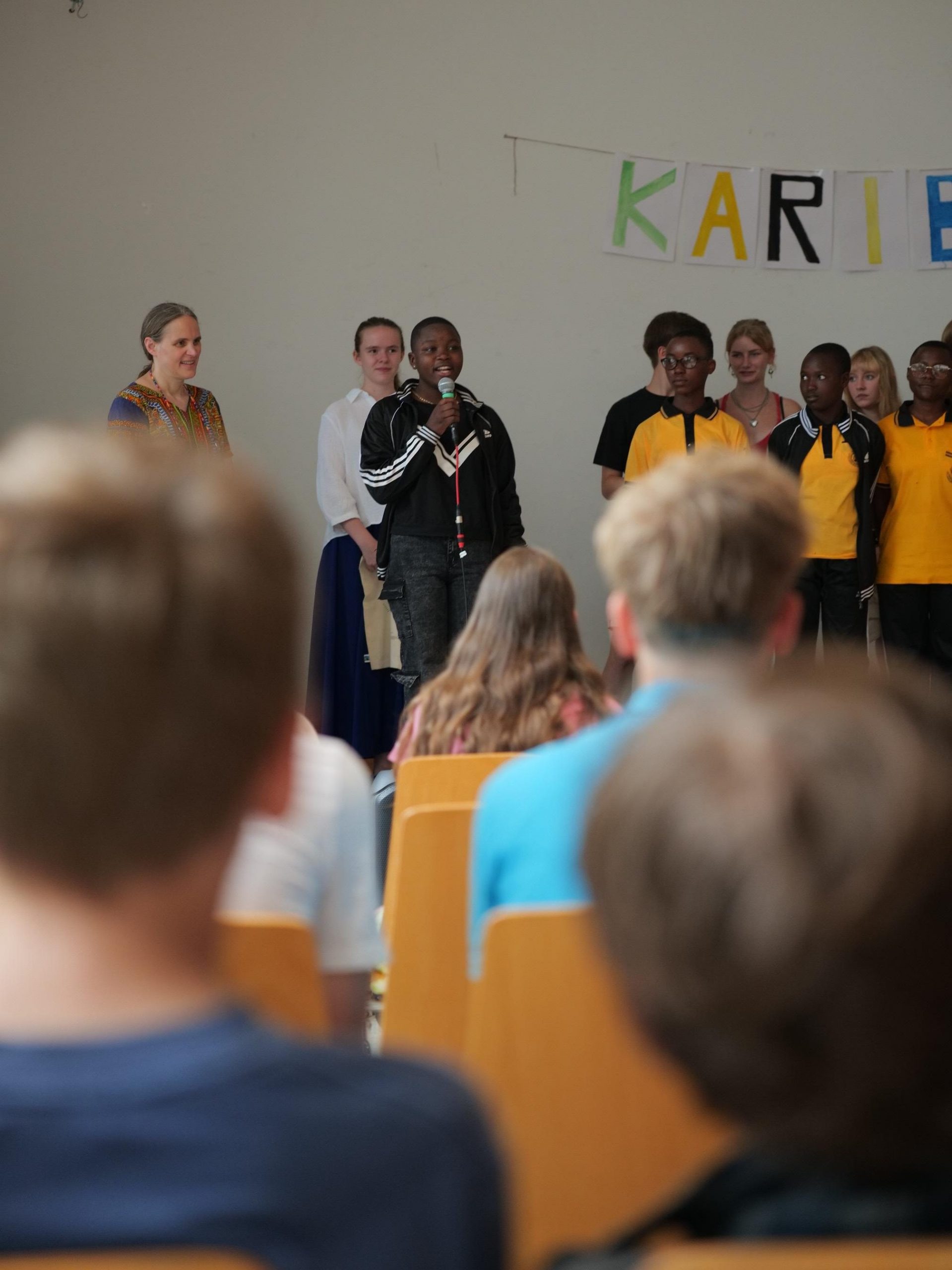
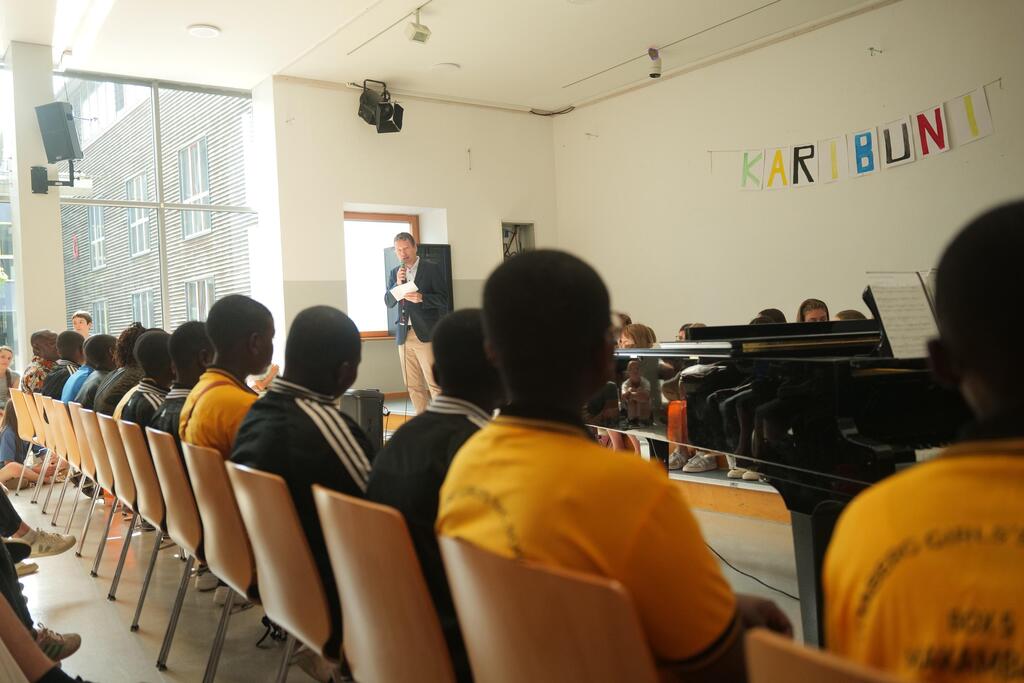
Tuesday: After arriving in school, the KHG students and teachers warmly welcomed us with a welcoming ceremony. They sang a song for us, the headmaster Mr. Rohnfelder held a very nice speech about the importance of our partnership and personally welcomed us, we also introduced ourselves and the Tansania AG students gave us some gifts. Afterwards a lot of the KHG students came to get to know us and talk with us.
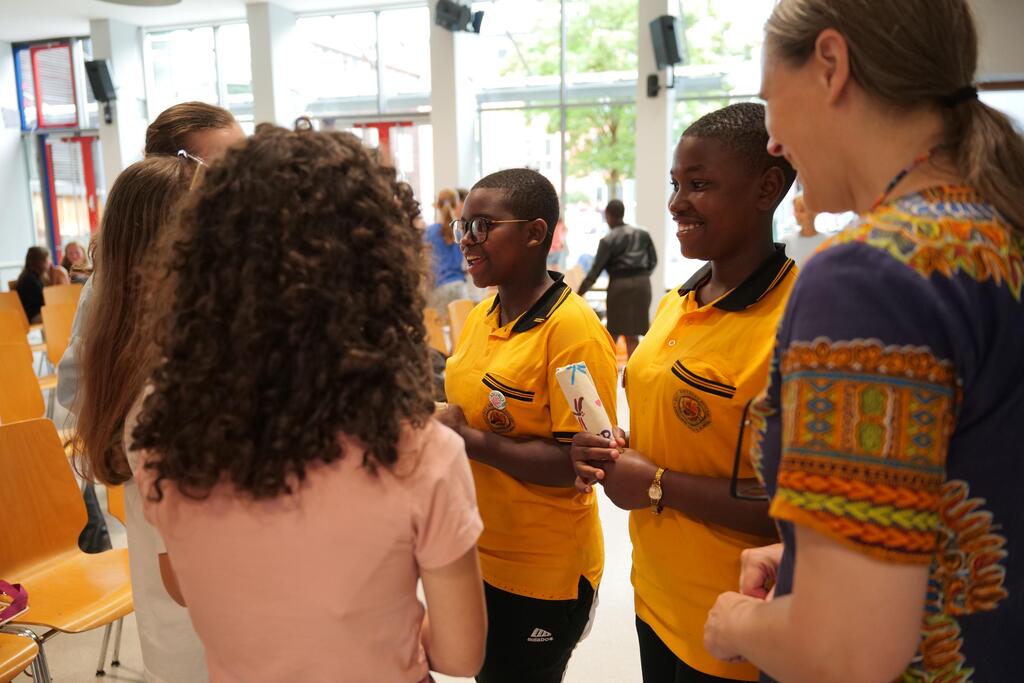
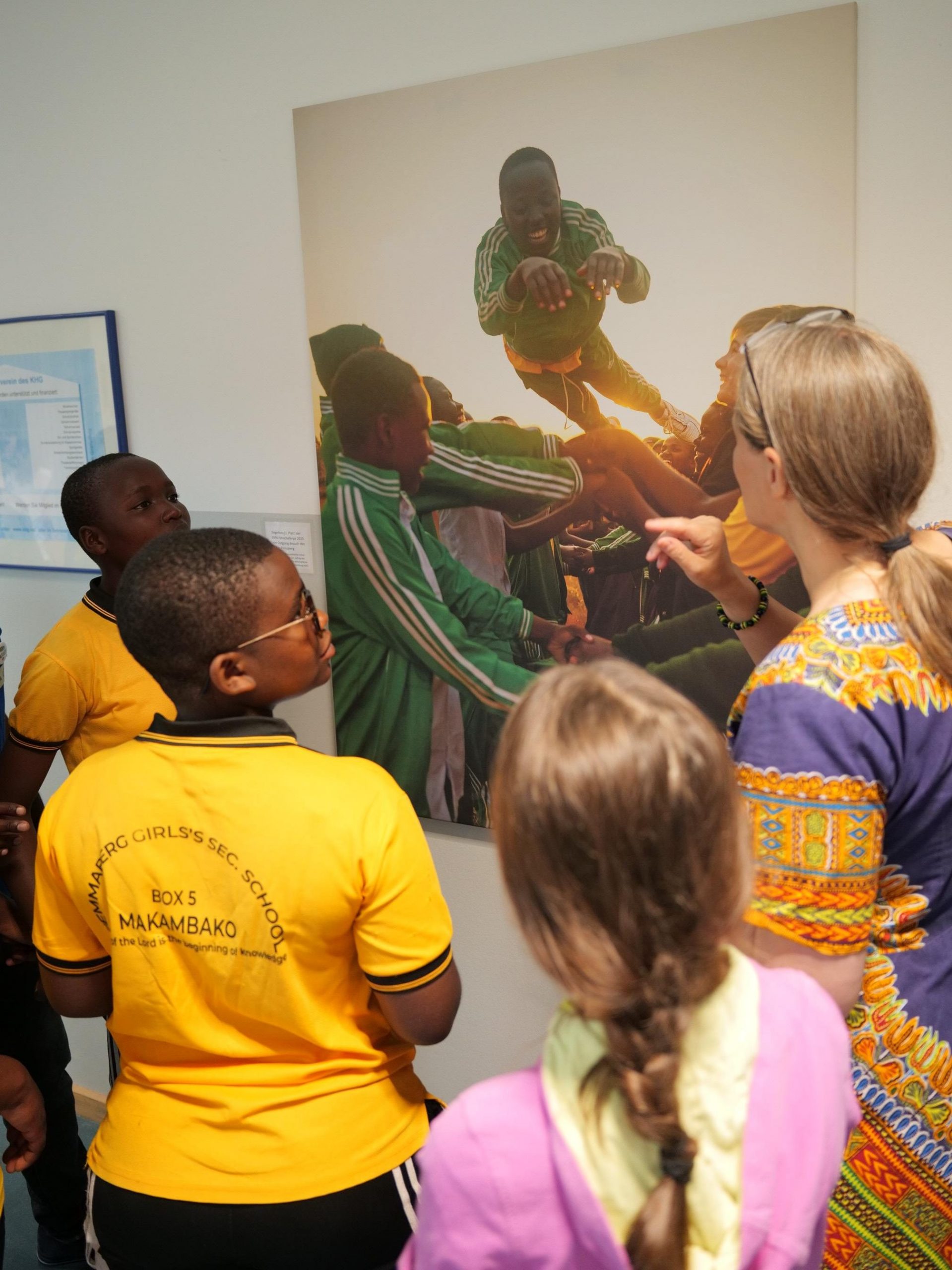
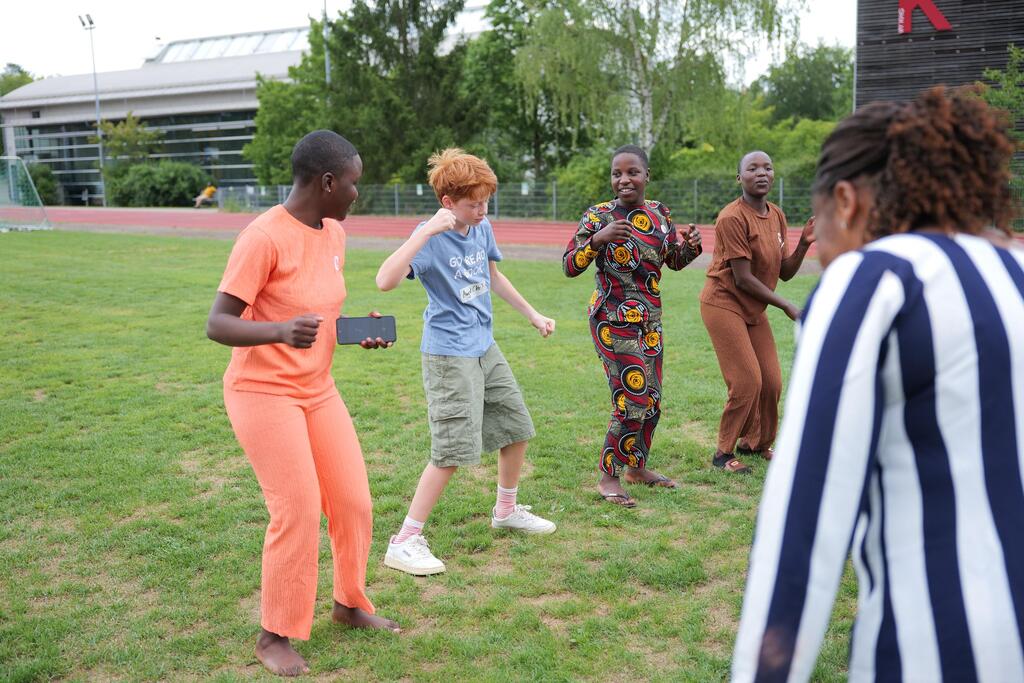
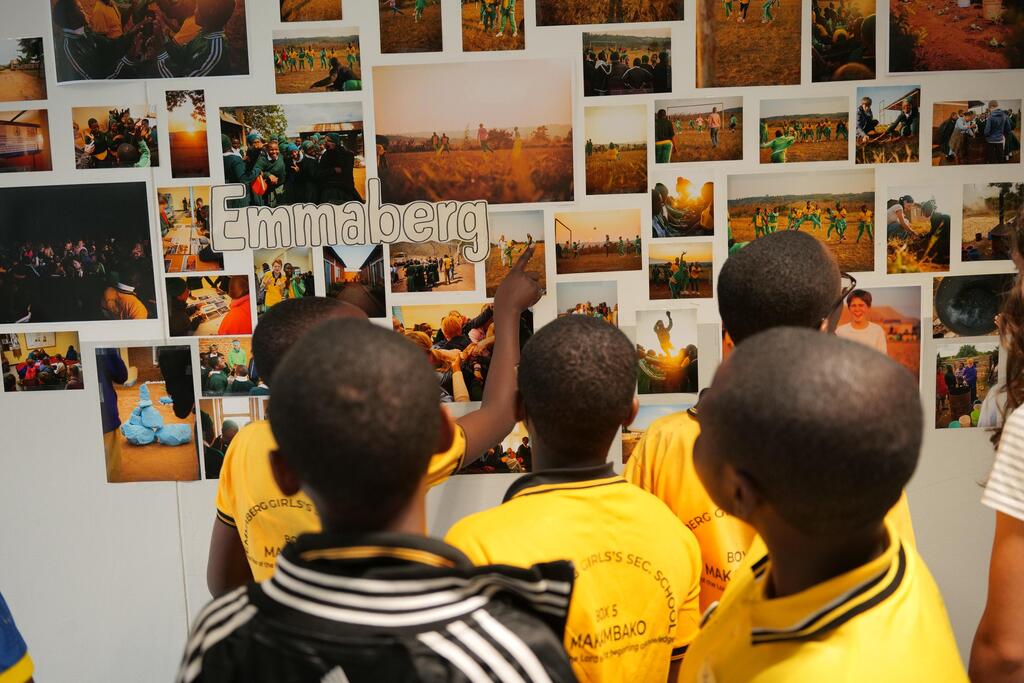
We were then introduced to the other members of the Tansania AG and played some games in order to get to know each other better and it was so fun! Our friends from the Tansania AG also showed us around the school compound and other places like the computer room, sports ground, some classrooms and classes, the photo exhibition of our exchange last year and also told us about the origin of the name of the school. We felt very comfortable thanks to everyone welcoming us so nicely!
Nuru, Agribeta and Teresia
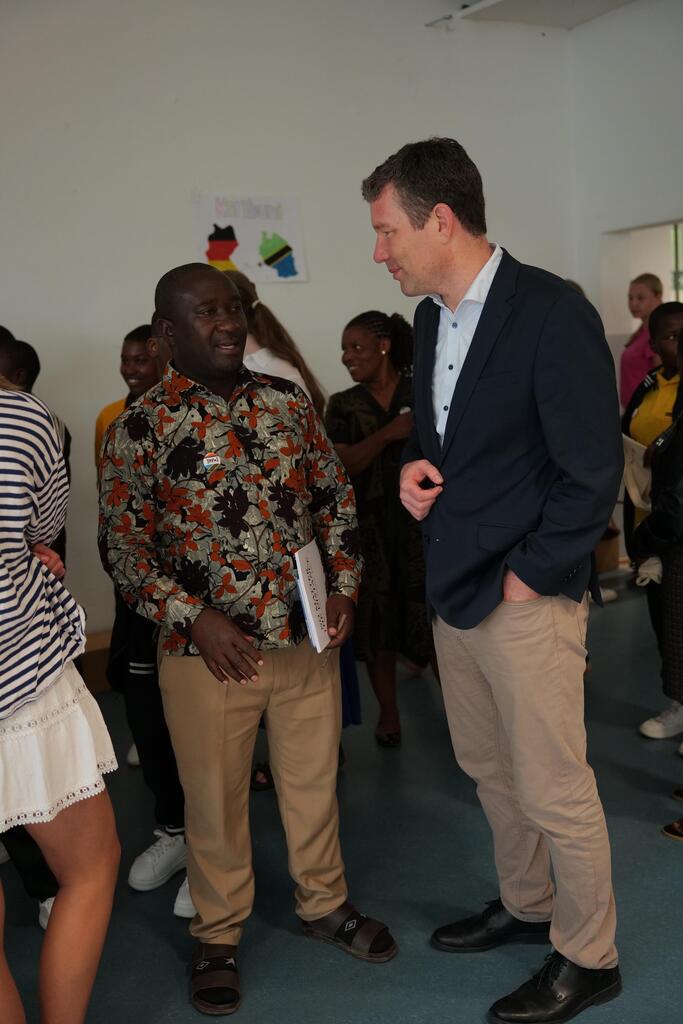
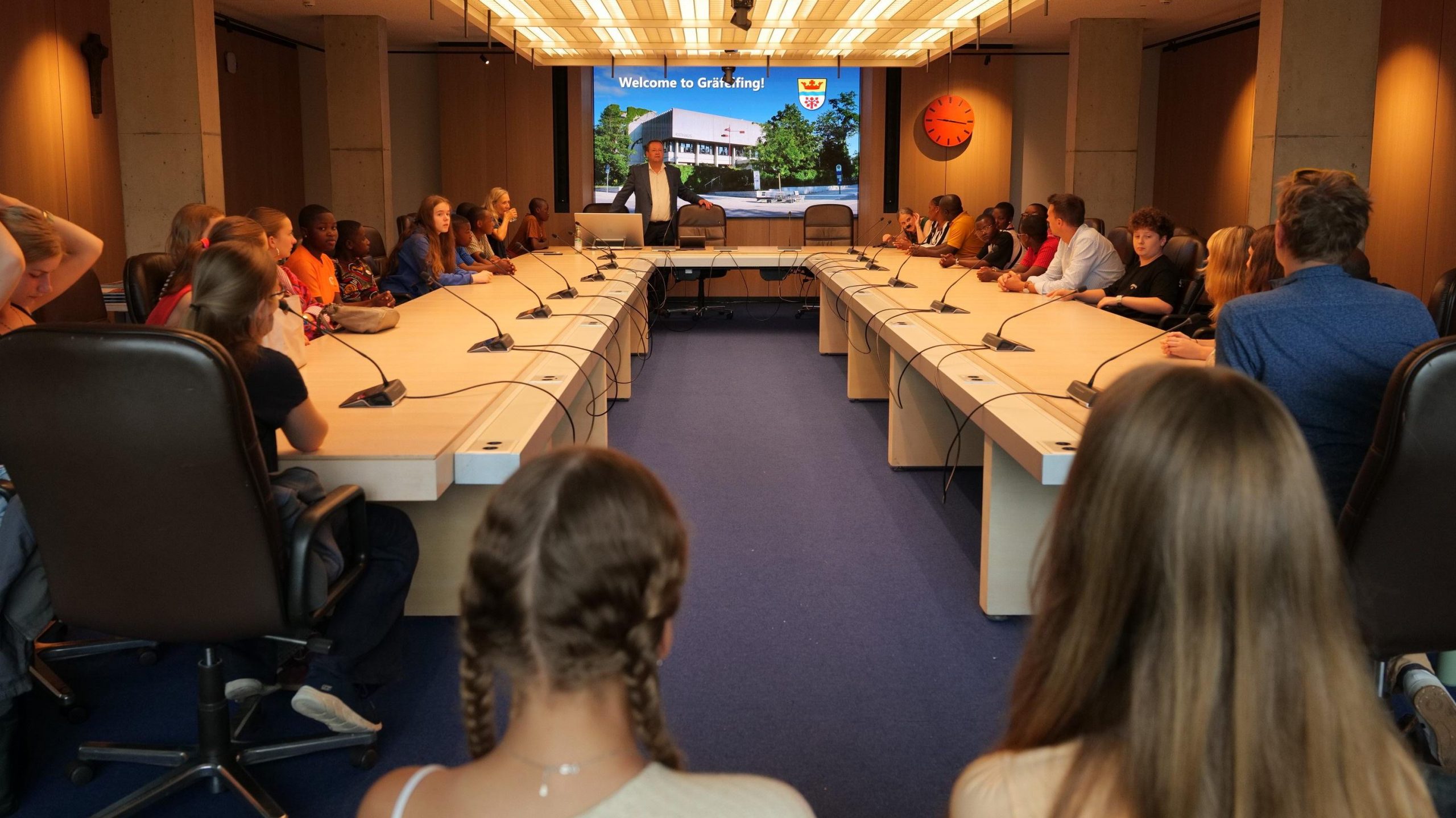
On Wednesday morning we were happy to get a chance to meet the mayor of Gräfelfing Peter Köstler. We were welcomed by him and told a lot about Gräfelfing as a town and its history. We Emmaberg students and teachers gave him a traditional gift from Tanzania called Kitenge, we were all glad he happily accepted it. He also gave us some small gifts to take with us.
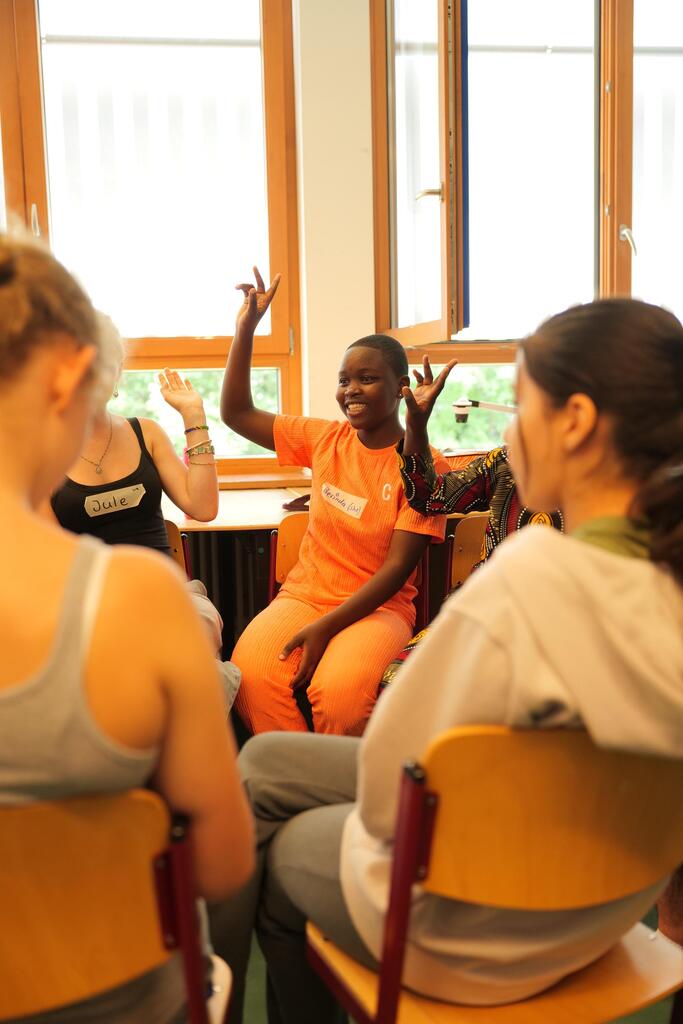
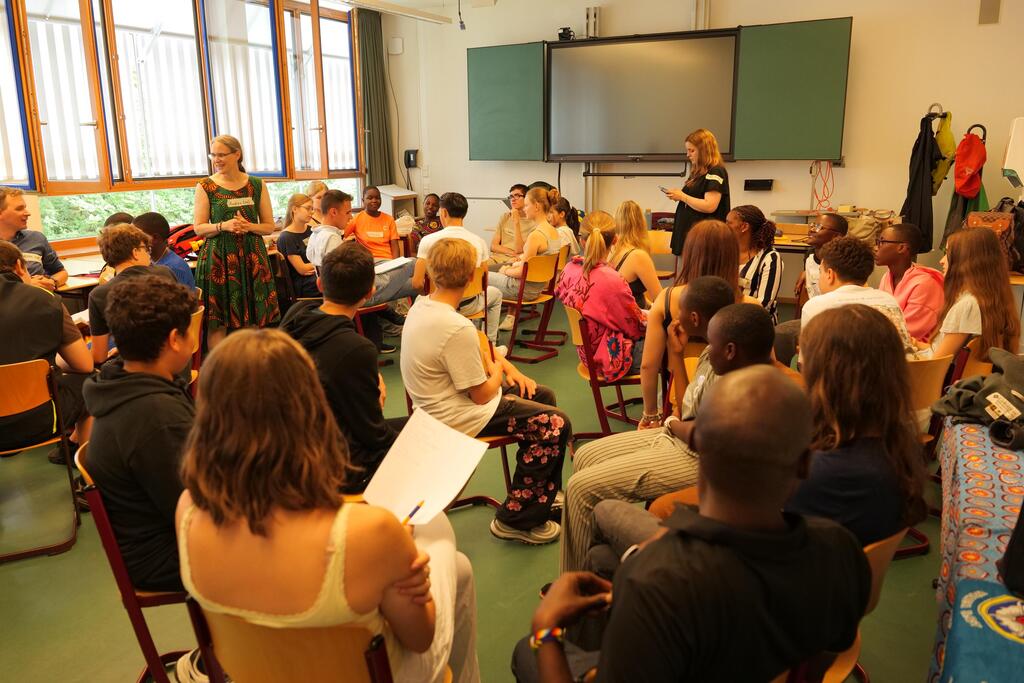
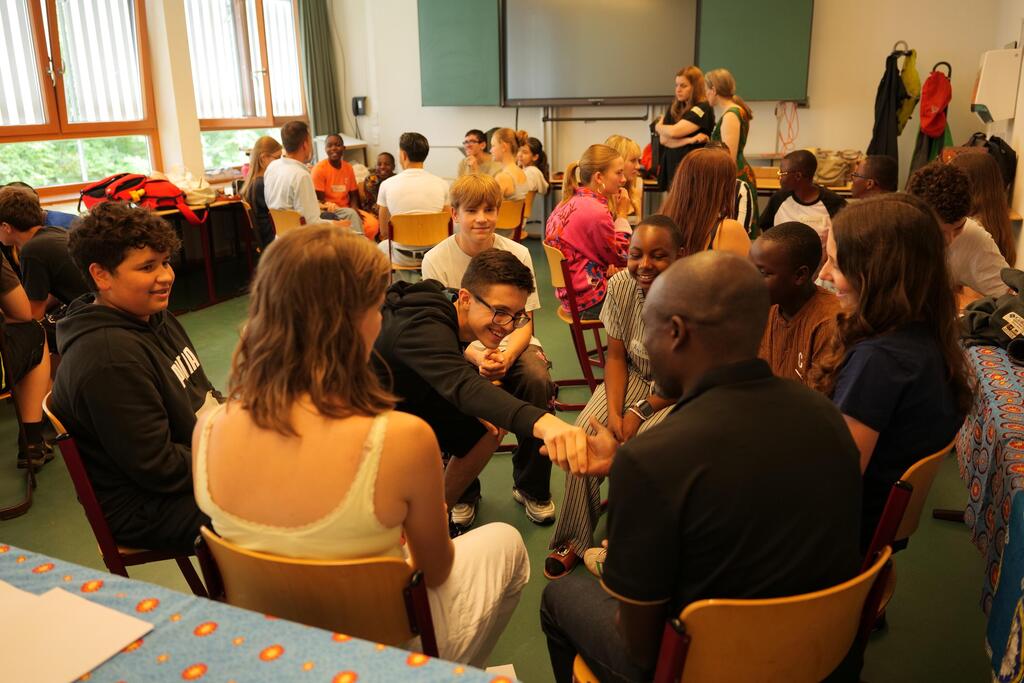
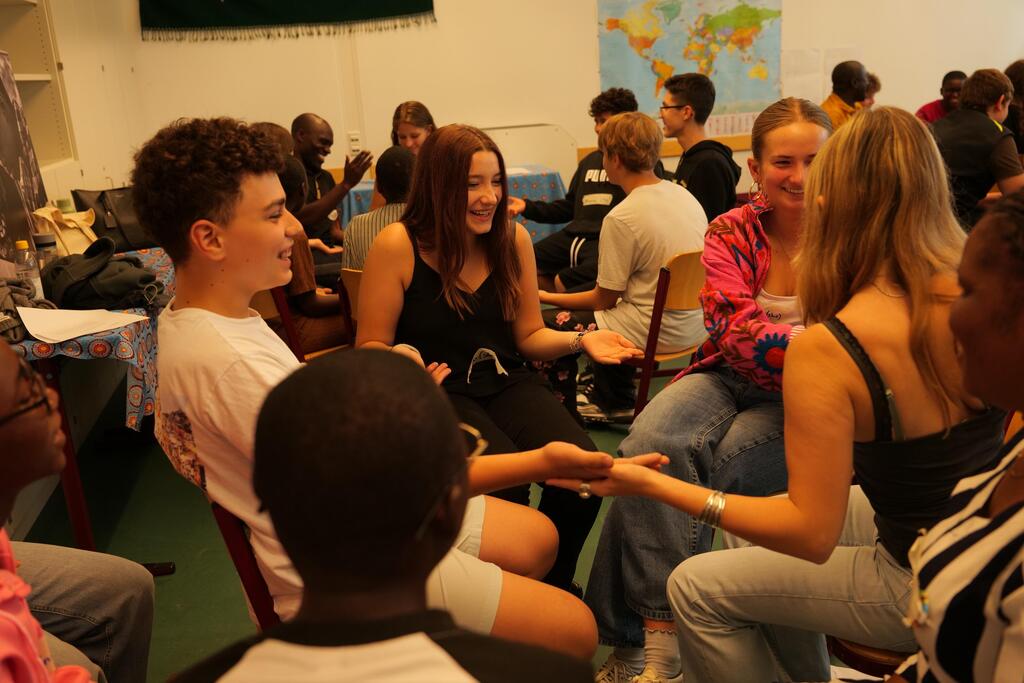
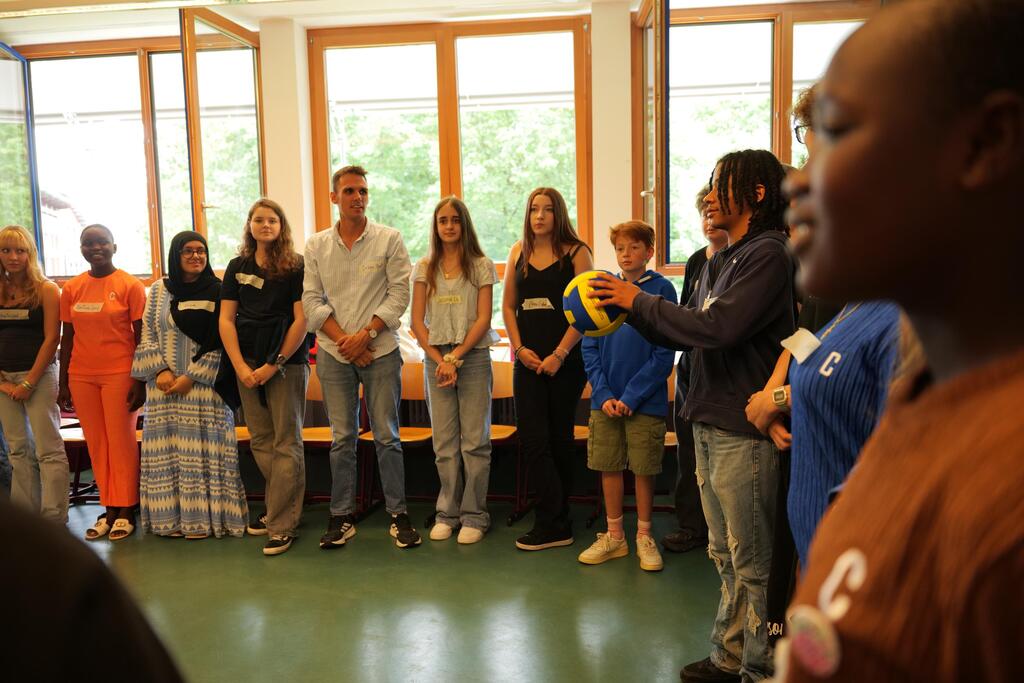
We were then very excited to meet with the middle school students, whom many of them had personal experiences of their families migrating to Germany, with some of them also having had to flee themselves. We played some games to get to know each other which was very fun and found out that we all had a lot in common. In groups we discussed important questions concerning reasons forcing people to flee their countries and what can be done to help them feel more comfortable in the country they arrive in. We were very happy to have so much fun with them and that they were so open and welcoming for taking their personal time to come and speak with us.
Upendo, Faraja and Imani
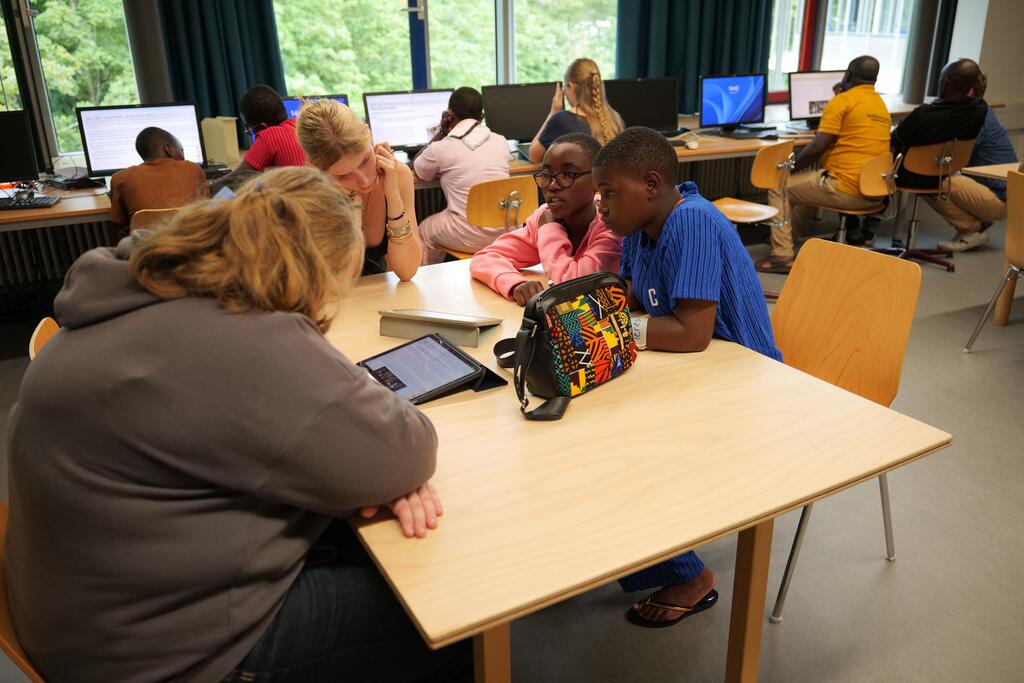
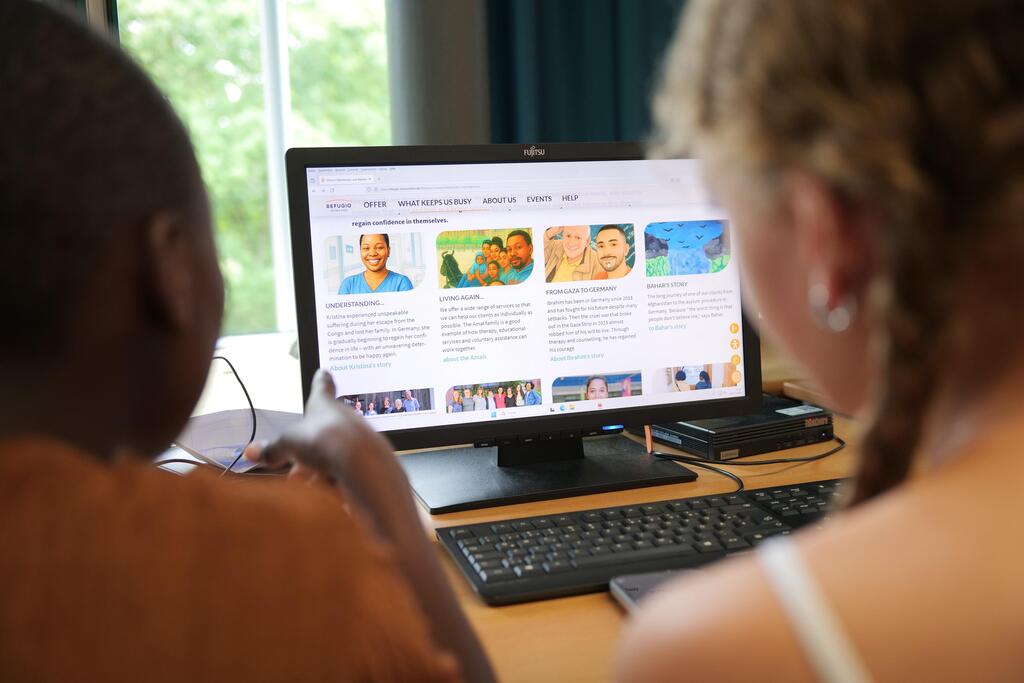
In the afternoon the group had the opportunity to research the experiences of refugees living in Germany. We based our work on personal stories shared by refugees about their journeys and their lives here. Coming from a peaceful country myself, I was deeply moved by what many of them had endured before arriving in Germany and receiving refugee status. I had always believed that political instability, resource & civil wars were the main reasons people became refugees. After reading their stories, I realized that besides these main causes there are also other reasons. Two stories touched me the most: one about a family who fled Sierra Leone because elders in their community wanted to circumcise (genitally mutilate) their daughter according to tradition, and another about an 11‑year‑old girl forced to marry an older man with two wives. She suffered greatly in the marriage and eventually escaped her country to find safety. Reading these stories taught me a great deal and opened my eyes to the many different reasons people are forced to leave their homes.
Sturida & Moses
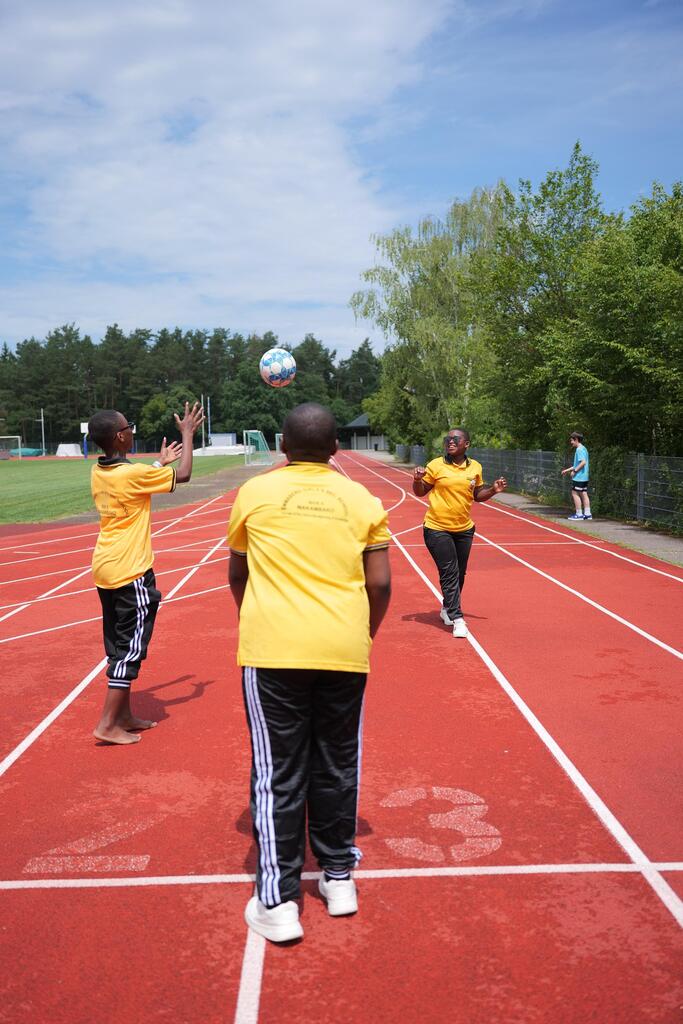
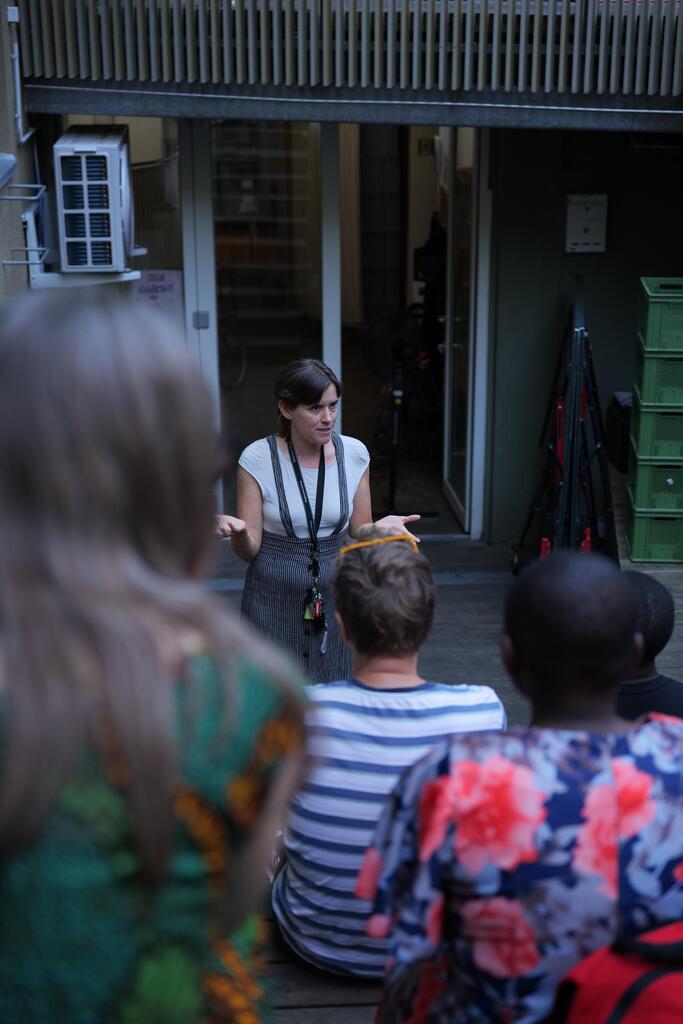
The tour at Bellevue di Monaco on Thursday was very interesting for us. It was very cool to hear about the history and beginning of the Bellevue di Monaco. It’s a a cultural center that offers refugees and local residents a space for meeting, support and exchange. It was started by neighbours who didn’t want Munich to tear down 3 houses and a playground but to use it for the people living there. Our highlight was playing football on the playground ontop of the building.
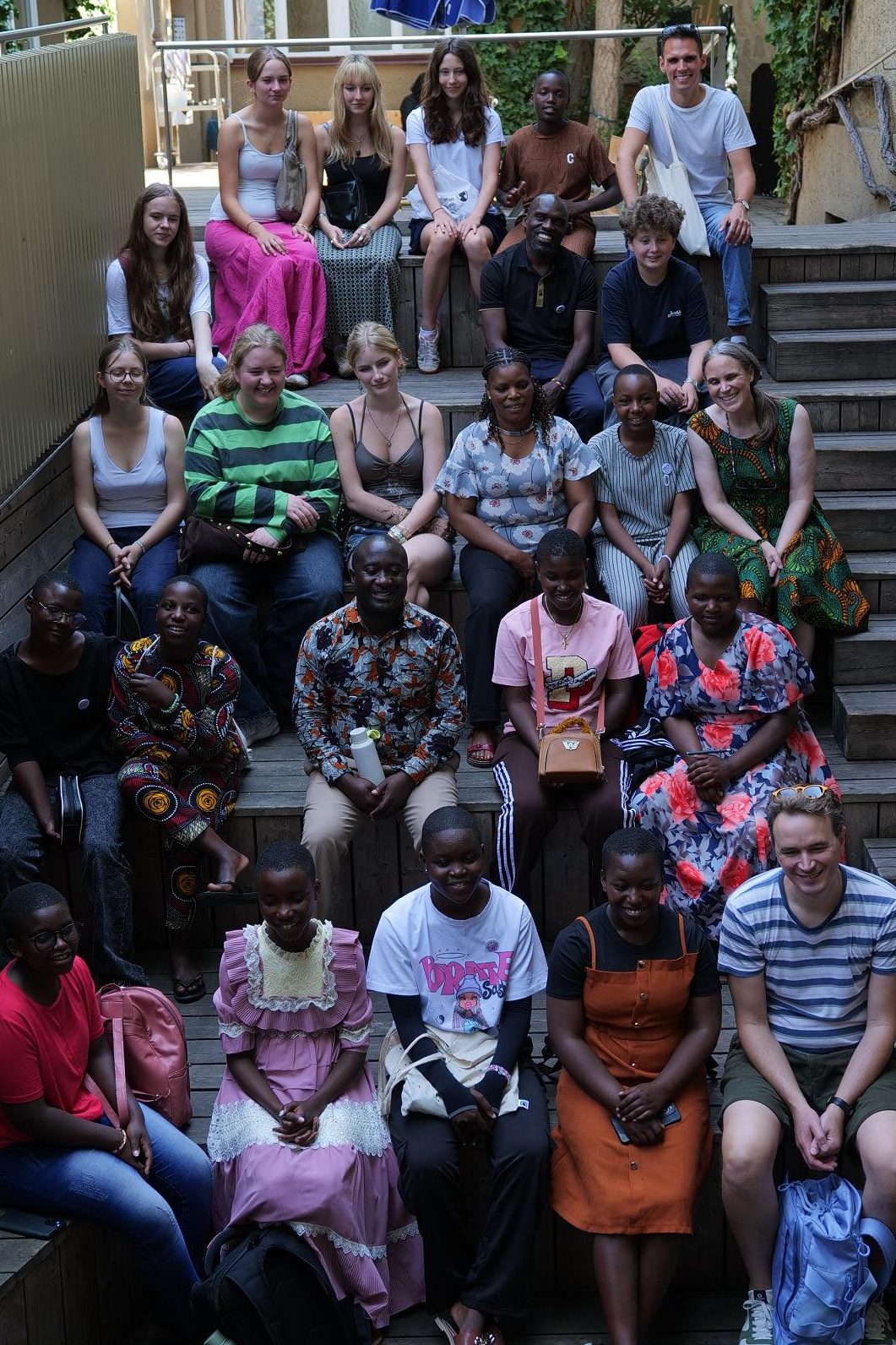
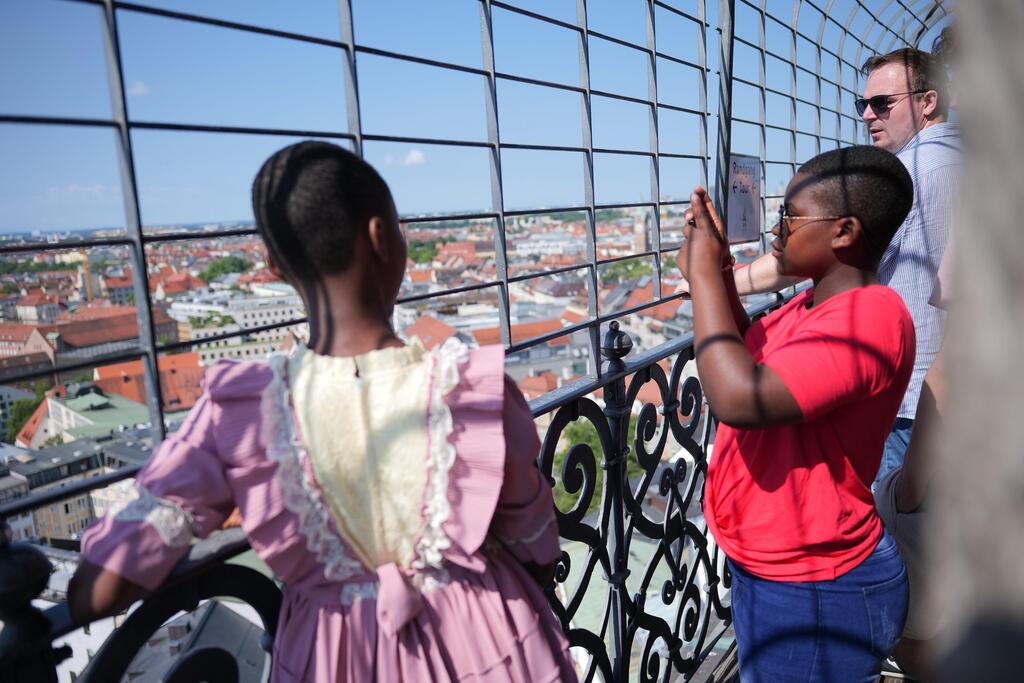
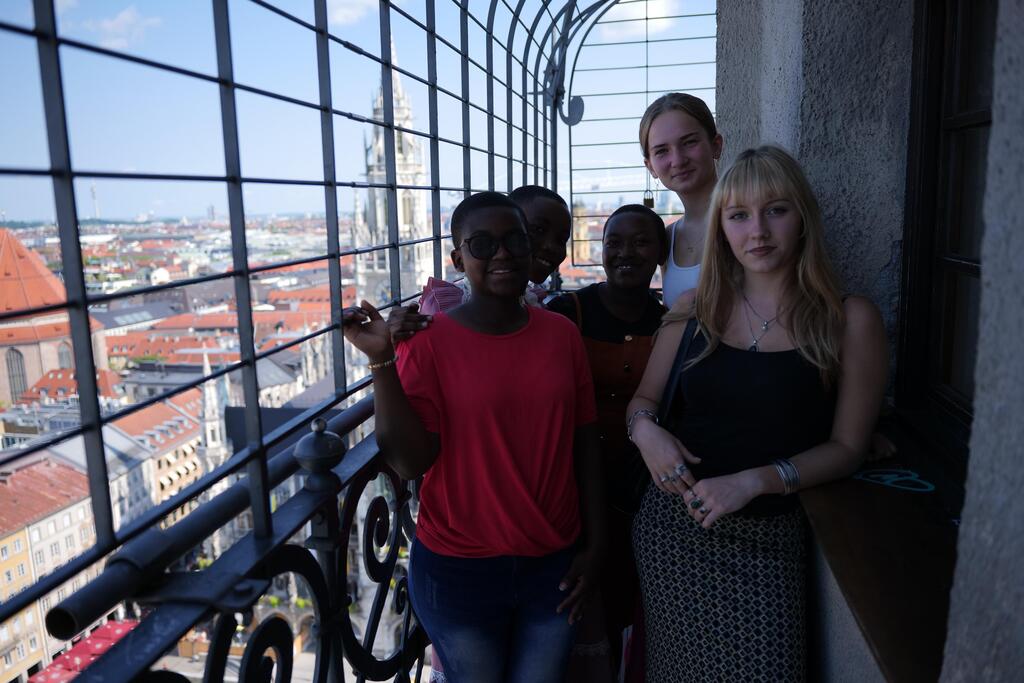
Also, our tour through Munich was very nice, since we were able to visit the Frauenkirche and enjoy the view from the top of tower of the Alter Peter as well as having a look at the different churches and also the university! We liked to learn more about the story of Kurt Huber and the „Weiße Rose“ as their resistance against Nazi Germany took place at the university.
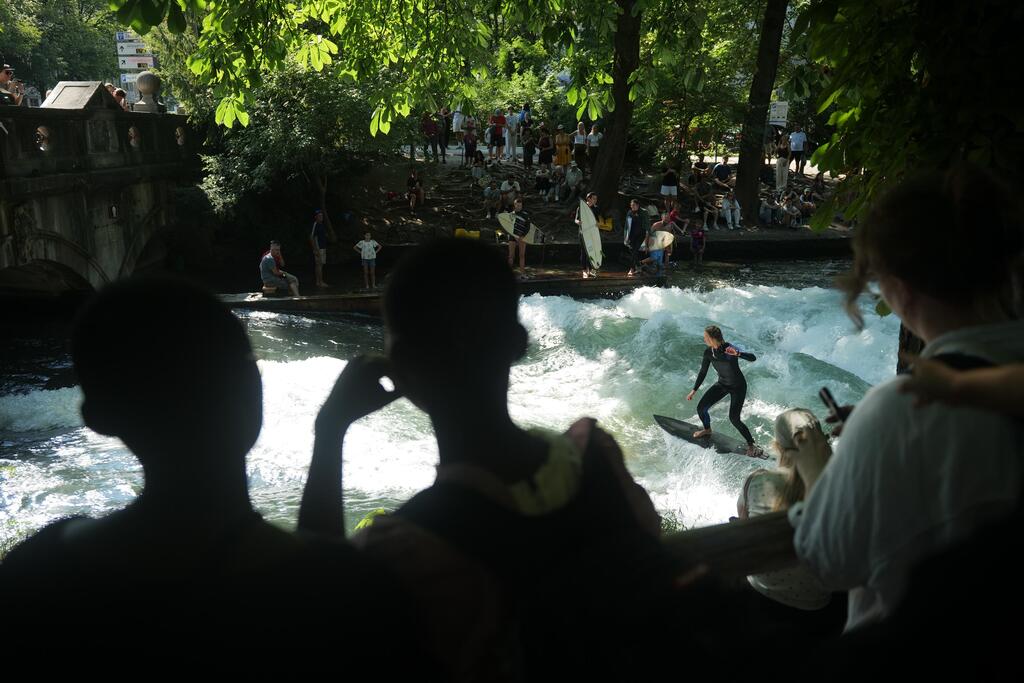
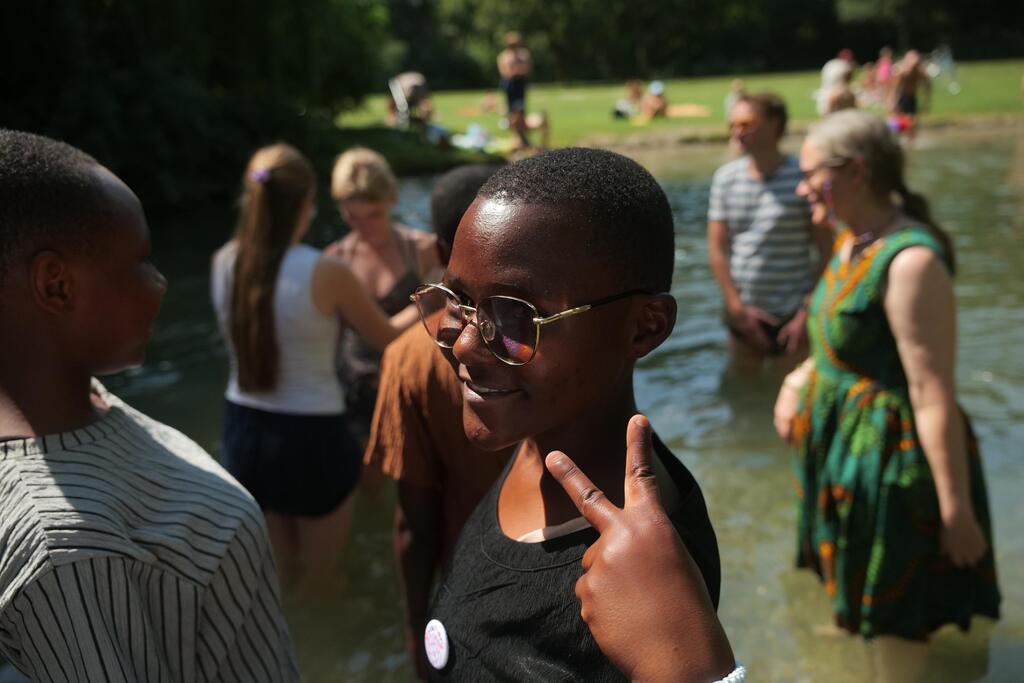
At the end we walked through the Englische Garten and had time to cool our feet in the water as the weather was very hot. We also watched the surfers at the Eisbachwelle.
It was positively surprising for the Emmaberg Students to see people of a lot of different nationalities in the city centre.
Franziska and Berinda
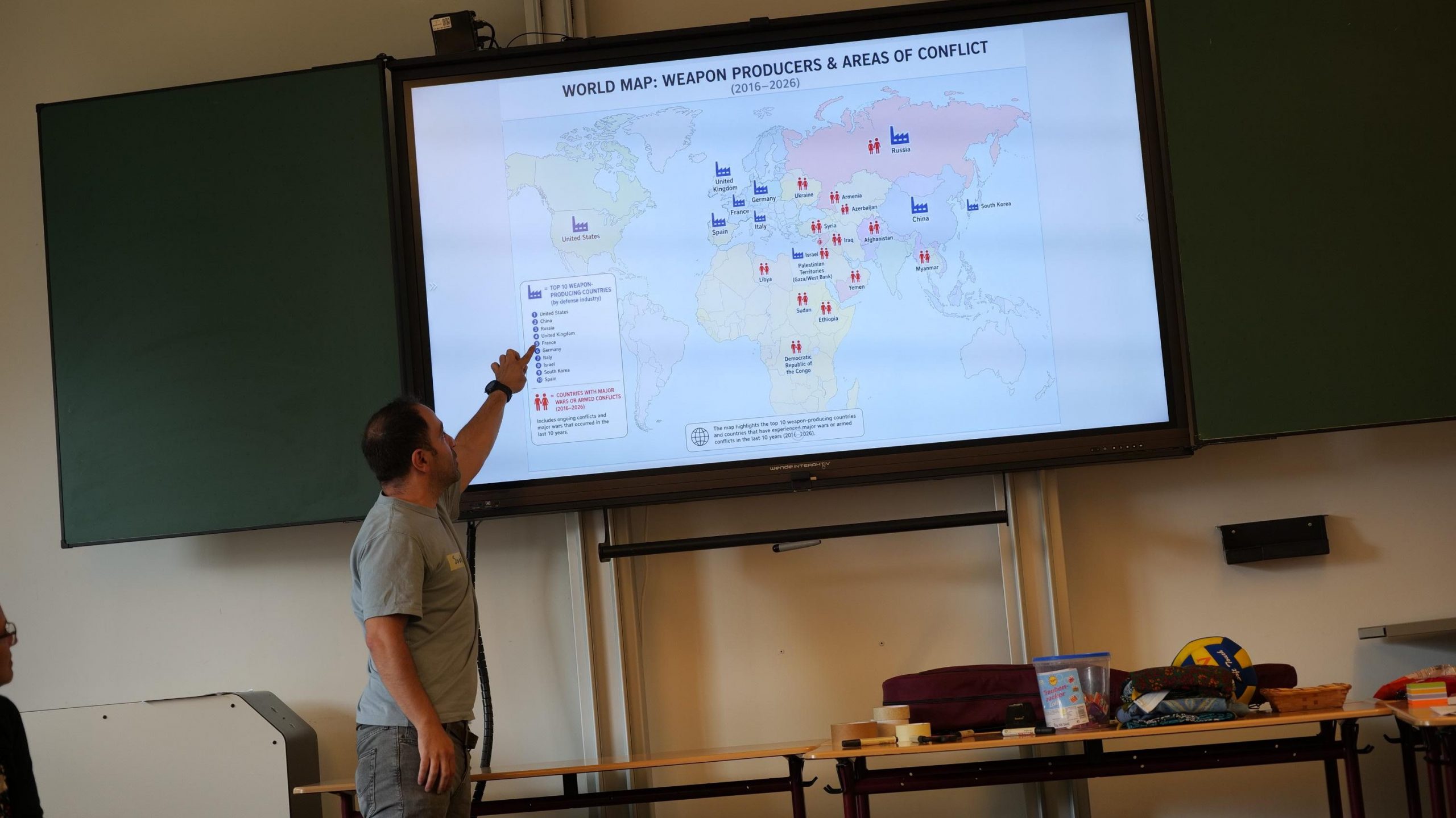
Nach einer kurzen Vorstellung von Saad, unserem heutigen Workshop-Leiter, ging es am Freitag direkt los. Der Workshop befasste sich mit den Menschenrechten von flüchtenden Menschen.
Zuerst ordneten wir Länder in zwei Kategorien ein. Länder in denen Krieg herrscht und die politisch instabil sind kamen auf die linke und Länder, die Waffen produzieren, aber keinen Krieg in ihrem Land haben, kamen auf die rechte Seite. Erstaunlich dabei war, dass so gut wie alle europäischen Länder Waffen produzieren – Deutschland ganz vorne mit dabei –, mit denen dann die Kriege z.B. im Kongo, Sudan, Gaza etc. geführt werden. Die Firmen in Deutschland und anderen EU Ländern machen also Profit dadurch, dass sie Kriege in vielen Ländern anheizen.
Danach zeigte uns Saad Bilder aus Syrien, seinem Heimatland, aus dem er bei Kriegsausbruch geflohen war. Wir sahen Vorher- und Nachher-Bilder von Krankenhäusern und anderen Bauten, die im Krieg zerbombt wurden und von denen heute nur noch traurige Trümmer übrig sind. Er erzählte uns auch von seinem Leben vor dem Krieg in Syrien, das sich von unserem hier heute nicht unterschied: er liebte Fußball, traf sich gerne mit Freund:innen, liebte gutes Essen …
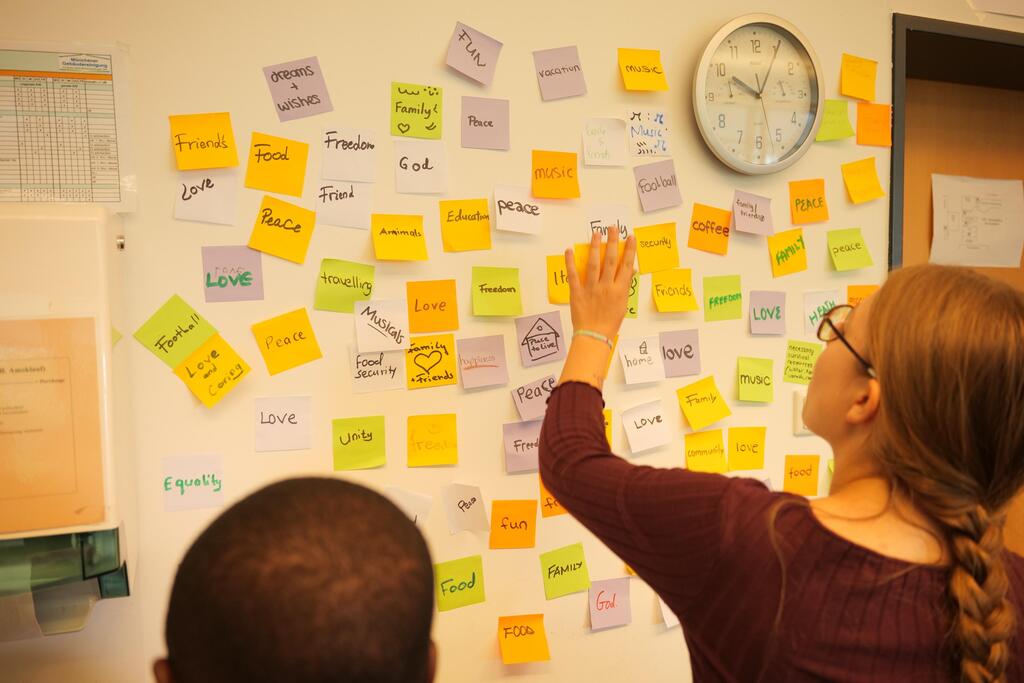
Dann stellte uns Saad eine wichtige Frage: Was braucht ihr für ein gutes Leben? Dazu gab er uns Post-It Notes, auf die wir mit Stiften jeweils Antworten aufschrieben und sie an die Wand klebten. Jede Person durfte vier Dinge aufschreiben. Unsere Antworten unterteilten wir dann in Dinge, die Luxus sind und die man nicht unbedingt braucht und in Dinge, die man definitiv für ein gutes Leben braucht. Über manche Dinge, die einige als Luxus ansahen wie z.B. Sport, Musik oder Kaffee, entstanden Diskussionen, weil andere meinten, dass sie ohne sie nicht leben könnten.
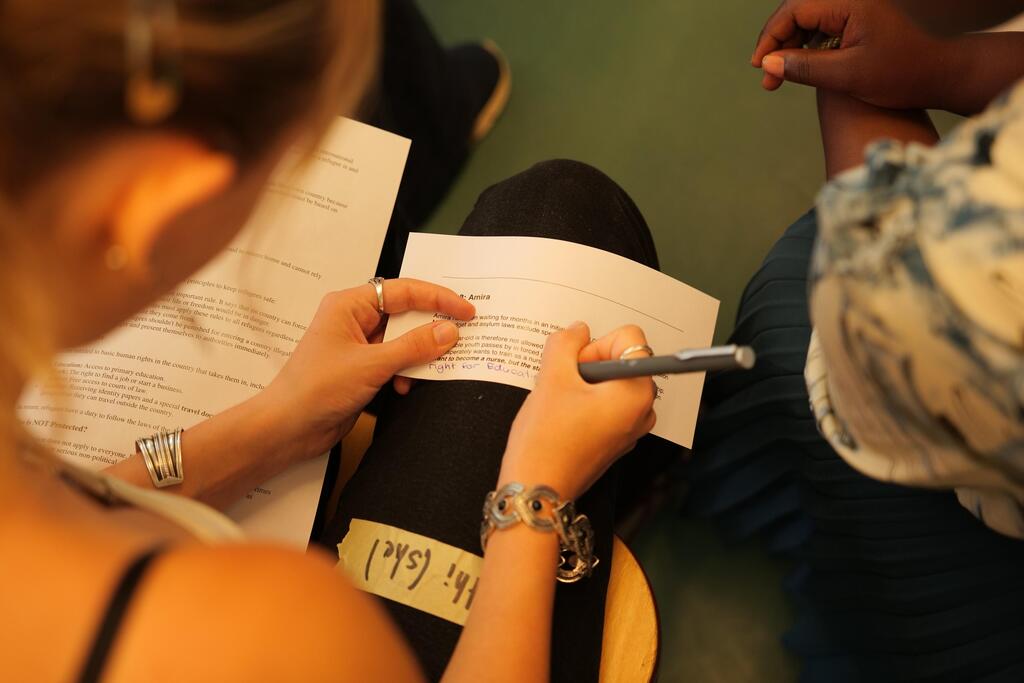
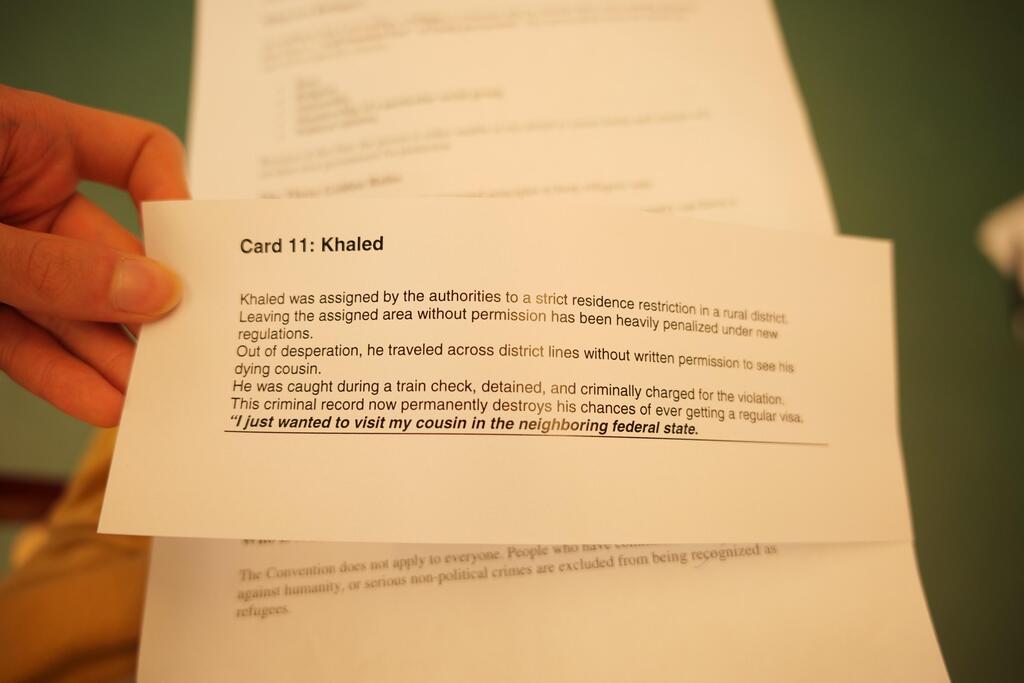
Nach einer kleinen Pause machten wir weiter mit dem nächsten Punkt von Saad‘s Workshop. Unterteilt in kleine Gruppen gemischt mit tansanischen und deutschen Schüler:innen sowie Lehrkräften lasen wir uns die 1951 von den Vereinten Nationen verabschiedete und bis heute von 149 Staaten unterschriebene Genfer Flüchtlingskonvention durch. Dann lasen wir 11 Beschreibungen von realen Situationen geflüchteter Menschen in Deutschland und diskutierten darüber, ob sie gegen die Genfer Flüchtlingskonvention verstoßen oder ob sie diese internationale Vereinbarung befolgen. Die verschiedenen sehr problematischen Realitäten von Flüchtlingen zeigten sehr klar, dass es in Deutschland noch einiges zu verbessern gibt.
Jule und Abby
Unsere Begegnungsreise wird gefördert durch ENSA, das entwicklungspolitische Schulaustauschprogramm von Engagement Global (im Auftrag des BMZ) und die Stiftung Jugendaustausch Bayern.